
A new finish on the floor you already have
Timber Floor Refinishing in Melbourne
Refinishing, sometimes called resurfacing, renews the colour, sheen and protective coating of a timber floor that is structurally sound. Solid and engineered floors are assessed first, so the method suits the timber and the result you want.
What Refinishing Changes and What It Keeps
Refinishing replaces the finish on a floor without replacing the floor. The boards stay in place, and the coating, and where wanted the colour, is renewed.
It suits floors that are sound but no longer look or perform as they should. Floors with damaged or gapped boards need restoration first, and the choice of coating system is set out on the polishing page.
REASONS
Reasons Floors Are Refinished
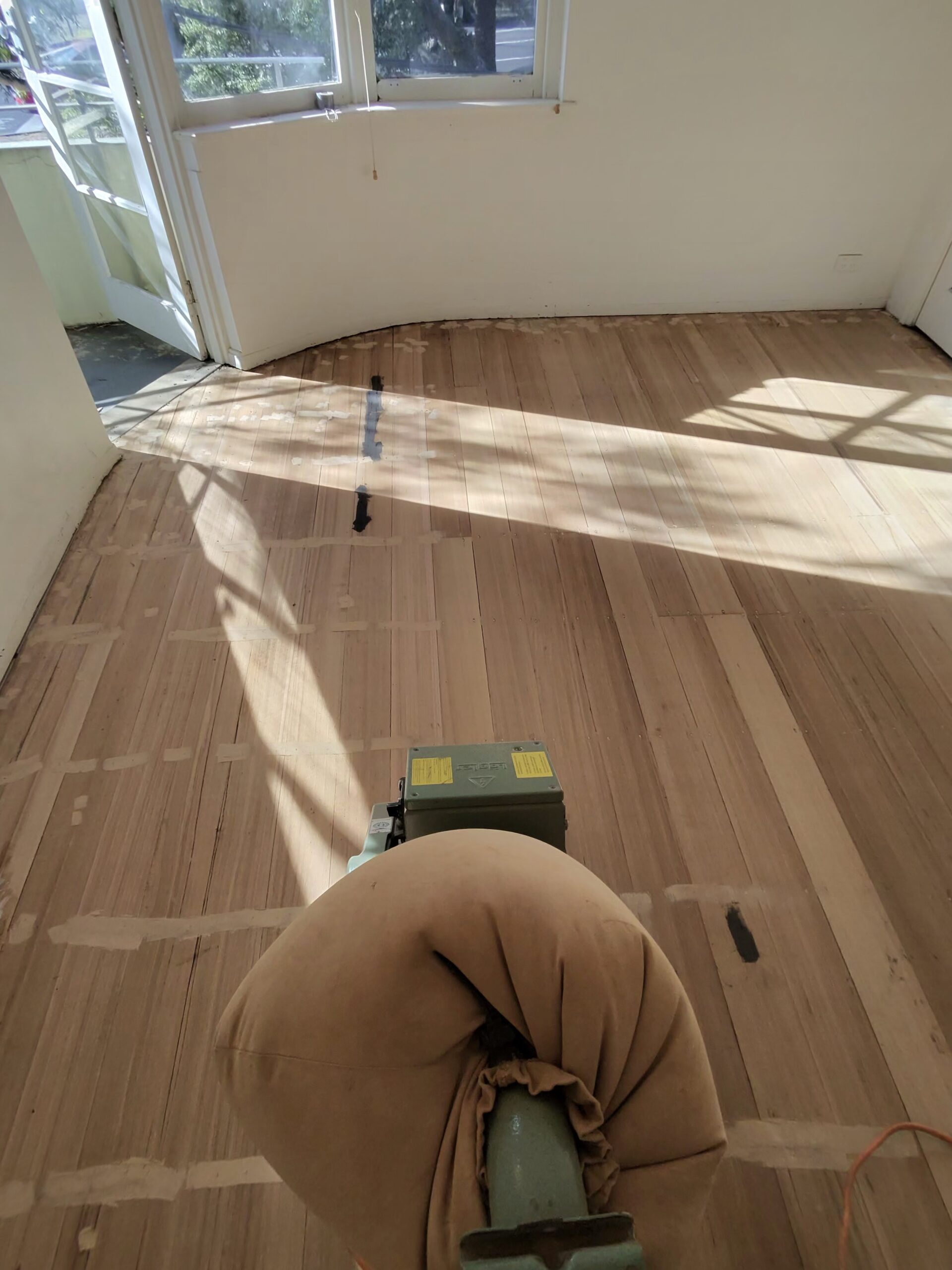
Coating
A Worn Coating
Traffic lanes, dull patches and fine scratches show where the coating has worn. Renewing it protects the timber before wear reaches the boards themselves.

Colour
A New Colour
A floor that no longer suits the home can be taken back to bare timber and finished in a new tone.
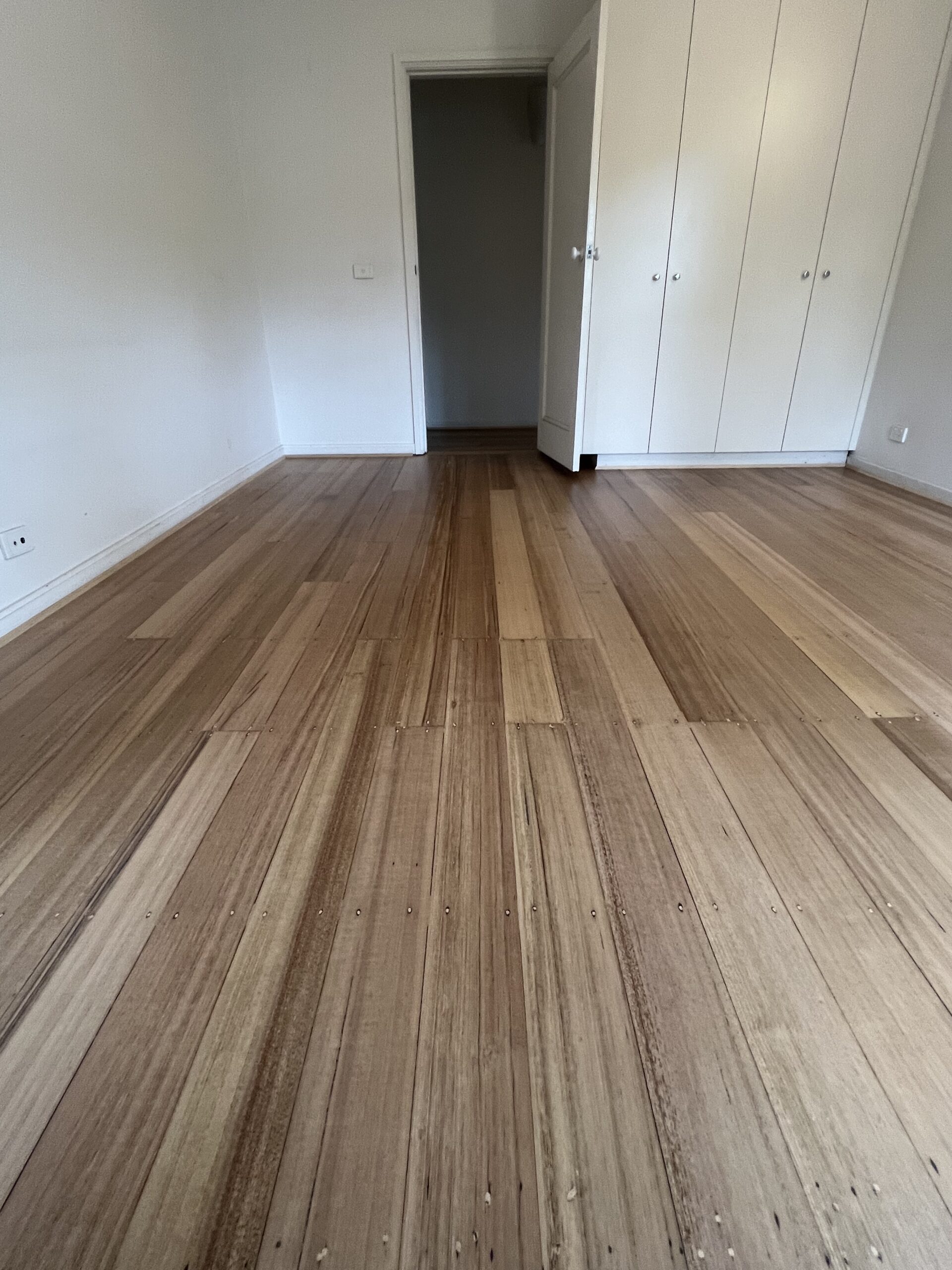
Sheen
A Different Sheen
The look of a floor shifts with the sheen of its coating, from matte through to gloss. A refinish is the point to choose a different one.

Building work
After Renovations
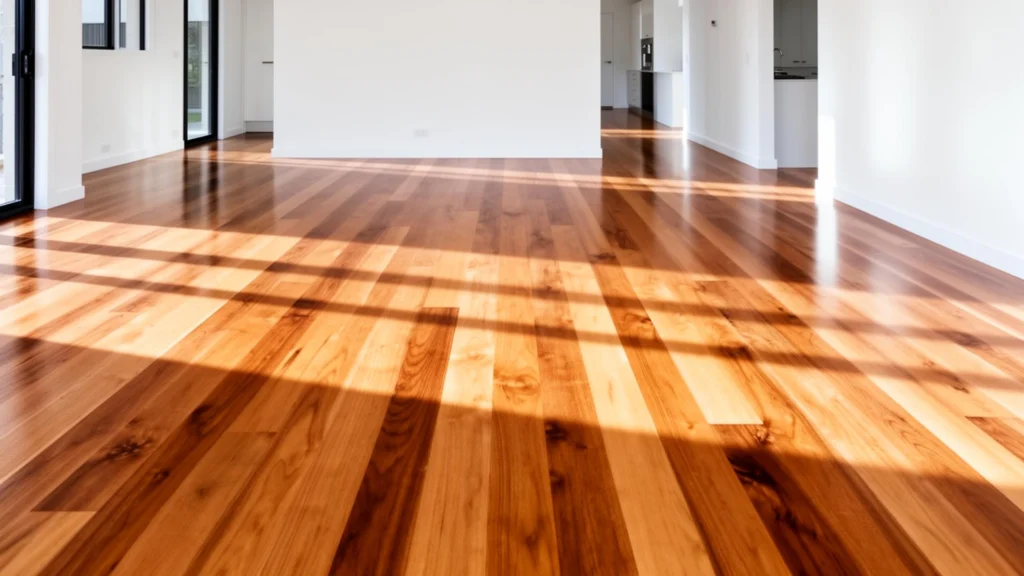
Paint splashes, adhesive marks and mixed finishes left by building work are cleared back to even timber, so the floor reads as one surface.
Full Refinish or Recoat
Not every floor needs sanding back to bare timber. A recoat abrades the existing finish and applies a new coat, which suits a floor with a sound finish. A full refinish removes the finish, and any stain, back to timber.
| Your goal | Usual method | Why |
|---|---|---|
| Tired coating, same colour | Recoat | The existing finish is sound and compatible, so a new coat renews protection without removing timber |
| A new colour | Full refinish | Colour only changes once the old finish and stain are sanded off |
| Scratches through to the timber | Full refinish | A recoat renews the coating but does not remove deeper marks |
| Waxed floor or unknown coating | Test first, then usually a full refinish | Wax and some factory coatings can stop a new coat bonding |
| Engineered floor with a thin wear layer | Recoat or a very light sand | Sanding removes timber that a thin layer cannot spare |
A recoat is a lighter job, but it has to be repeated more often than a full sand. The assessment recommends one method and gives the reasons. full sand
Changing the Colour of a Floor
Colour changes at the sanding stage, not at the coating stage. The old finish and any existing stain are removed to expose bare timber, then a stain or a clear finish is applied. A clear finish keeps the natural tone of the timber, and a stain shifts it.
Because the result depends on the timber, colour is confirmed on a sample before the whole floor is coated.
| Wear layer | What it usually allows | Approach |
|---|---|---|
| Under 2 mm | No sanding back to bare timber | Cleaning and recoat only, after assessment |
| About 2 mm | One very light sand at most | Light sand or recoat, depending on condition |
| About 3 mm | One careful sand and recoat | Full refinish with controlled sanding |
| 4 mm and over | More than one refinish over the life of the floor | Treated much like solid timber |
Engineered Timber and Wear Layer Thickness
An engineered floor has a layer of real timber over a plywood or other base, so only that top layer can be sanded. Its thickness decides how much refinishing is possible.
These ranges are a guide only. The manufacturer product details and a measurement on your floor decide. Factory applied coatings can also limit recoating, so the existing finish is identified before any method is chosen.
Process
Decisions Before Work Starts
1
Goal
The same look renewed, or a change of colour or sheen.
2
Method
Recoat or full refinish, based on the finish and timber found at the assessment.
3
Colour
Natural tone or stain, with a sample for any change.
4
Finish system
Matched to the timber and how the room is used.
5
Sign off
The written quote records the method, the finish and the scope before work begins.
Where Refinishing Reaches Its Limit
Refinishing renews a surface. It does not correct movement, gaps or damaged boards, which belong to restoration. A floor already sanded close to its tongue, or an engineered floor with too little wear layer, may be better recoated than sanded again. Laminate and vinyl have no timber surface to refinish, so they sit outside this service.
Refinished Floors
Before
Layout / Prep
Sanding
Finish
After
Reviews
What Melbourne homeowners say after they see the floor in daylight.
Trustindex verifies that the original source of the review is Google. We were recommended by a friend to use James from Melbourne Floor Sanding and the entire process has been excellent. He is very easy to work with, came back quickly when contacted, all options were explained and we now love the look of our flooring. I rarely leave reviews but just had to after using this service.Posted onTrustindex verifies that the original source of the review is Google. I felt confident with James and his team from the start as they had been recommended. I was not disappointed. They did a BRILLIANT job. Its like I have a new house. They identified boards that might not come up well and simply replaced them, matching my existing 60's boards. They also effortlessly replaced my old skirts which I upgraded to a new, more stylish board. Clearly, I highly recommend them. They are "old fashioned" tradies who take care and pride in their work.Posted onTrustindex verifies that the original source of the review is Google. Thanks James for suburb work on recent MtEliza project. You held the date we originally locked in and working on site with your guys was a pleasure. And we were a little under what we thought the final cost would be. Win.Posted onTrustindex verifies that the original source of the review is Google. James runs the only sanding company I will use, I’ve used James on many tier 1, 2 sites along with many high end residential and commercial jobs and I won’t ever hire anyone else. James and his guys are second to none, their attention to detail is amazing and they are always reliable. Couldn’t recommend them enough!Posted onTrustindex verifies that the original source of the review is Google. We had our yellowed wood floors sanded and resealed by James and his wonderful team. We were beyond delighted with the results and price. We found James by word of mouth and love using local trades when possible. All work was done professionally and minimal dust. Would highly recommend.
Refinishing Across Bayside and the Peninsula
Refinishing work is booked across Bayside Melbourne and the Mornington Peninsula. Suburb details sit on the areas page.
FAQ
Floor Refinishing Questions
If you still have questions after this, call. It will be faster than guessing.
Can a floor be recoated instead of sanded?
Often, when the existing finish is sound and compatible. A recoat renews the coating without removing timber, but it cannot change the colour or remove deeper scratches. Waxed floors and some factory coatings need testing first.
How can I tell if my floor is engineered timber?
Look at a board edge in a doorway, under a threshold or around a vent. Layers of plywood, or a thin top layer of timber over a different base, point to an engineered floor. Solid boards are timber all the way through. A photo of the edge can be sent with your quote request.
How often does a floor need refinishing?
It depends on foot traffic, the coating and the timber. Renewing the coating before wear reaches the boards means fewer full sands over the life of the floor, and every full sand uses some of the timber depth.
Will refinishing remove scratches?
Scratches in the coating go with it. Deeper marks are sanded out in a full refinish where the timber depth allows, and damage beyond that is handled as restoration.
Get a quote
Plan Your Floor Refinish
Send your suburb, the floor type and what you would like to change. If the floor is engineered, a photo of a board edge helps. The assessment confirms the method and the written quote follows.
Call now and get clarity fast.
A company of First for Flooring. Call: +61 434 913 656 Email: sales@firstforflooring.com
Compare properly: ask who is doing the work, what sanding system they use, how they handle edges and transitions, and what finish they recommend for your lifestyle.
Request a written quote
Prefer to speak to someone? Call +61 434 913 656